


How to Wrap Your Hands for Muay Thai & Boxing (Step-by-Step Guide)
Whether you’re training Muay Thai, boxing, or MMA, proper hand wrapping is essential. Hand wraps protect your knuckles, wrists, and the small bones in your hands from injury — and they also help your gloves fit better and last longer.
In this guide, we’ll show you exactly how to wrap your hands correctly, including an advanced knuckle padding technique used by experienced fighters.
Why Hand Wrapping Is So Important
Your hands contain 27 small bones, and every punch sends force back through them. Without wraps, you risk:
-
Sprained wrists
-
Broken knuckles
-
Damaged tendons
-
Long-term joint pain
Hand wraps act like structural support for your hands:
-
They stabilise the wrist
-
Protect the knuckles
-
Keep the bones aligned
If you train more than once a week, wraps are non-negotiable.
What You’ll Need
-
180-inch (4.5m) hand wraps (standard adult length)
-
Boxing or Muay Thai gloves
Shorter 120" wraps are usually for kids or very small hands.
Step-by-Step: How to Wrap Your Hands

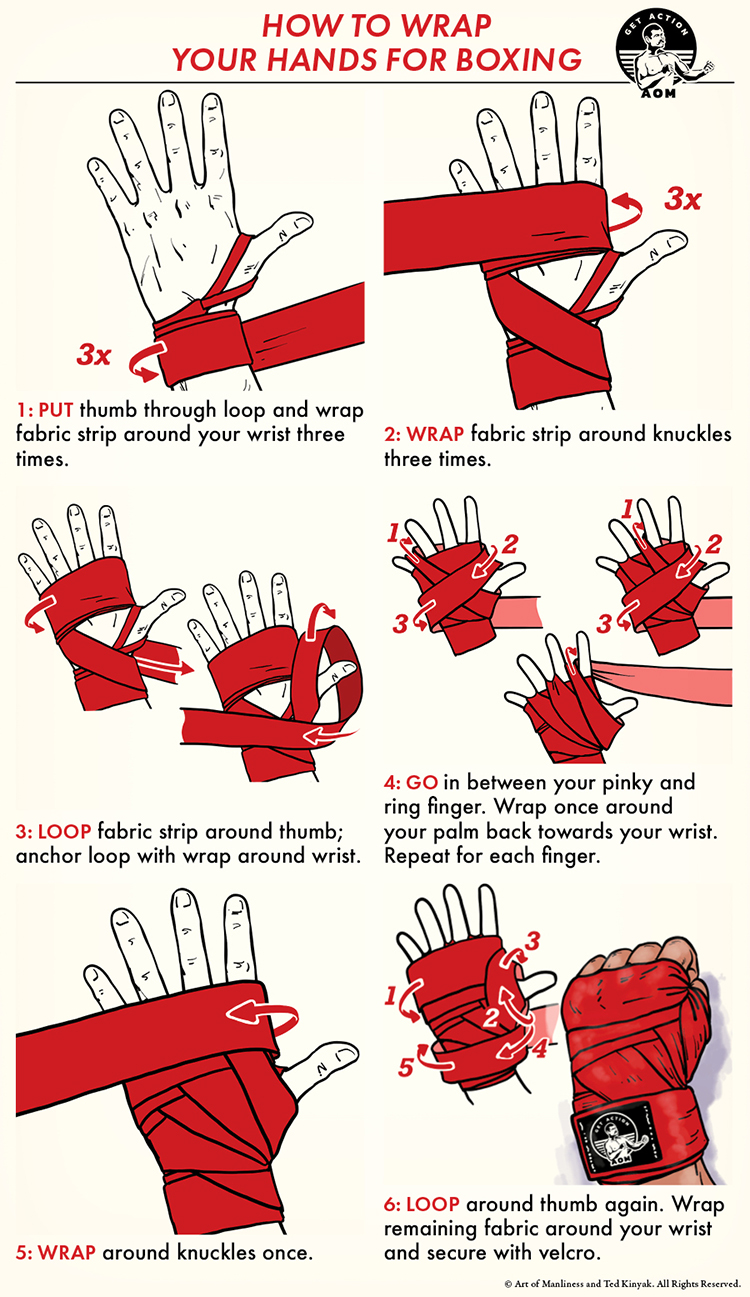
Step 1 – Build the Wrist Base
Place the loop over your thumb.
Wrap 2–3 times around your wrist to create a strong base.
This is your main wrist support and helps prevent hyperextension.
Step 2 – Pad the Knuckles
From the wrist, bring the wrap up the back of the hand and go around the knuckles 3–4 times.
Keep your fingers slightly spread so the wrap lies flat across all knuckles.
This is your main impact protection.
Step 3 – Lock It Back at the Wrist
Bring the wrap back down and go once around the wrist to secure the knuckle padding.
At this point, your hand should already feel supported.
Step 4 – The Finger Weave (Key Technique)
Most gyms teach wrapping the fingers from the outside in:
Little (pinky) → ring → middle → index
This order gives better support to the weaker outer knuckles and keeps the wrap flatter across the hand.
For each finger, use this exact movement pattern:
Back of hand → between fingers → across the palm → through the gap between thumb and index finger → back around the hand
Start with the pinky:
-
From the wrist, bring the wrap up the back of the hand
-
Go between the pinky and ring finger
-
Come across the front of the hand (palm)
-
Go back through the gap between thumb and index finger
-
Wrap once around the hand to lock it in
Then repeat the same steps for:
-
Ring finger
-
Middle finger
-
Index finger
Always working from outside to inside.
This creates individual support for each knuckle and keeps the bones aligned when you make a fist.
Step 5 – Final Knuckle and Wrist Lock
After finishing the fingers:
-
Do 1–2 more passes around the knuckles
-
Then wrap down the wrist until the wrap runs out
-
Secure with Velcro
Your hand should feel:
-
Stable
-
Aligned
-
Easy to make a fist
Not bulky. Not numb.
How It Should Feel (Quick Check)
When wrapped correctly:
✅ You can fully close your fist
✅ Your wrist feels supported
✅ Your knuckles feel padded
❌ No tingling
❌ No pressure points
❌ No loss of circulation
If it feels awkward — unwrap and redo it. Everyone messes it up at first.
Mental Shortcut (Coach’s Trick)
If you forget the pattern, remember:
Back of hand = structure
Palm = return path
Thumb gap = reset point
You’re basically drawing a figure-of-eight around each finger.
After a few sessions, it becomes pure muscle memory.
Optional: Creating a Knuckle Pad with Your Hand Wraps
Many experienced boxers and Muay Thai fighters like to create a knuckle pad before fully wrapping their hands. This adds extra protection, especially for:
-
Heavy bag sessions
-
Sparring
-
Fighters with sensitive knuckles
-
Anyone returning from hand injuries
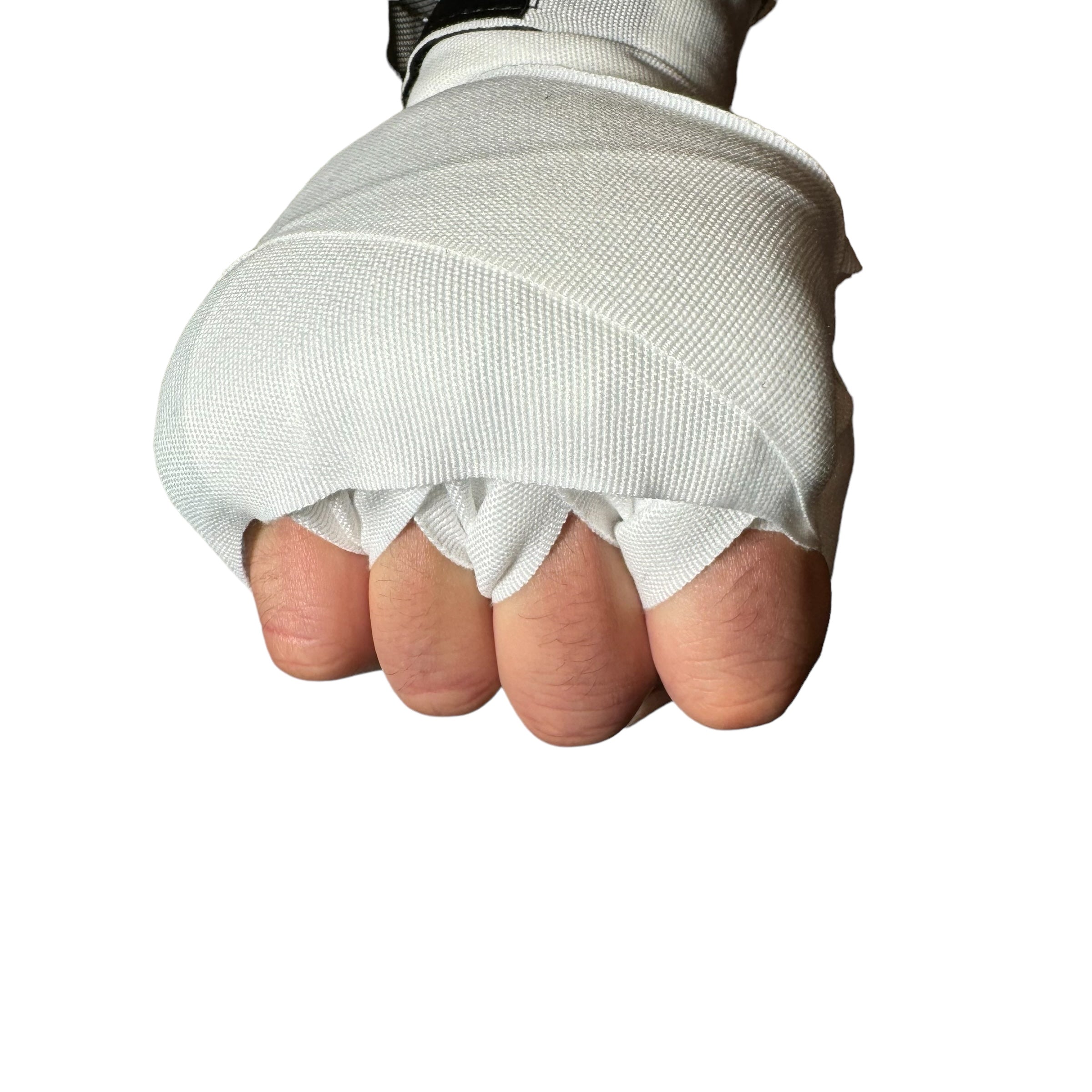
How to Make a Knuckle Pad
-
Unroll about 20–30cm of wrap
-
Fold it back and forth into a small pad
-
Place it directly over your knuckles
-
Hold it in place and begin wrapping as normal
-
Lock it in with 2–3 passes around the knuckles
This creates a custom shock-absorbing layer exactly where you need it most.
When You Should Use a Knuckle Pad
You’ll benefit most if:
-
You hit the heavy bag a lot
-
You do pad work frequently
-
You’ve had knuckle pain before
-
You use tight competition gloves
For light technical sessions, it’s optional.
Don’t Overdo It
Too much padding can:
-
Make it harder to close your fist
-
Reduce glove feel
-
Cause poor punch alignment
Rule of thumb:
Your fist should close naturally without resistance.
Muay Thai vs Boxing: Any Difference?
Structurally, the wrapping method is the same.
However:
-
Muay Thai fighters may wrap slightly lighter for clinch feel
-
Boxers often add more knuckle padding for heavy bag work
If you clinch a lot, avoid making the palm too bulky.
Common Hand Wrap Mistakes
❌ Wrapping too tight (cuts circulation)
❌ Leaving the wrist loose
❌ Skipping finger loops
❌ Never washing wraps
❌ Wrapping over open cuts
If your fingers go purple — redo them.
How Tight Should Hand Wraps Be?
Think: firm handshake tight, not tourniquet tight.
You should be able to:
-
Make a fist
-
Open your hand fully
-
Feel wrist support
No tingling. No numbness.
How Often Should You Wash Hand Wraps?
After every session.
Dirty wraps lead to:
-
Bacteria
-
Smelly gloves
-
Faster glove breakdown
Pro tip:
Use a mesh laundry bag so they don’t tangle in the wash.
Alternative: Quick Hand Wraps / Gel Wraps

Quick wraps are great for:
-
Beginners
-
Fitness classes
-
Casual bag work
But for sparring or serious training, traditional wraps are still superior.
Do You Need Hand Wraps Under 16oz Gloves?
Yes. Always.
Glove padding is not structural support.
Wraps protect your skeleton — gloves protect your opponent.
Recommended Wrap Length
| User Type | Wrap Length |
|---|---|
| Kids | 120 inch |
| Small hands | 150 inch |
| Most adults | 180 inch (ideal) |
| Big hands / extra padding | 210 inch |
Final Advice from Experience
From years of Muay Thai and boxing training:
Any wrap that allows your hands to feel stable, aligned, and able to form a solid fist will work — but longer wraps give you more room to customise protection.
Don’t overthink it.
Just wrap every session.
Your hands will thank you in 10 years.
Shop Hand Wraps (UK)
If you're training regularly, you’ll want at least 2–3 pairs on rotation.
Look for:
-
180” cotton or semi-elastic
-
Thumb loop + strong Velcro
-
Breathable fabric
(Perfect place to link your UK Fight Gear wraps collection.)


